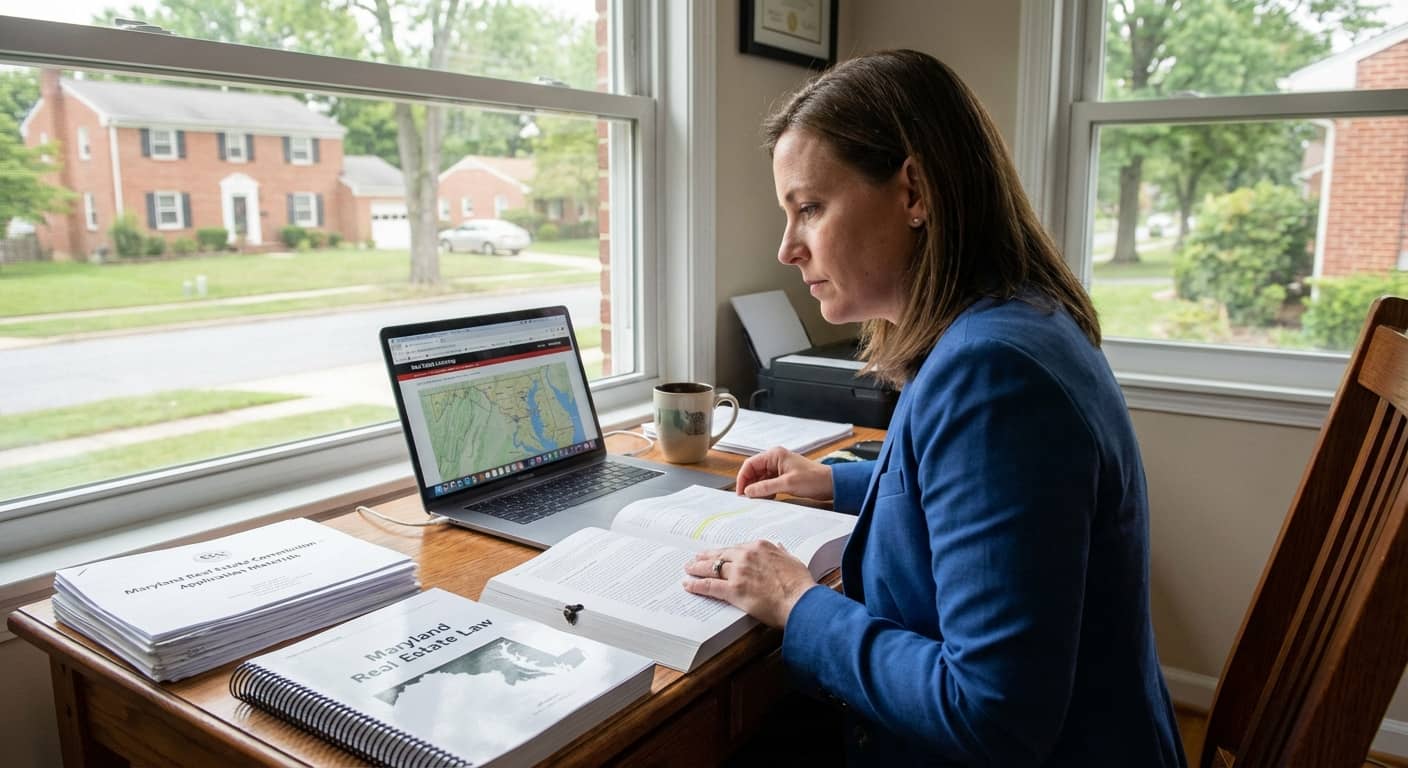
Getting your real estate license is moderately hard.
Not because the material is “advanced.” Because the process demands follow-through. You have to finish the coursework, learn a new vocabulary, pass a timed exam that’s written in legal language, and complete the paperwork correctly.
If you’re consistent, it’s very doable. If you’re a procrastinator who hates structured studying, it can feel brutal.
What “hard” really means in real estate licensing
When people say “it’s hard,” they usually mean one of three things.
First, the content is dense. It’s not complicated like calculus, but it’s detailed. The same concept shows up in five different forms, and the exam expects you to spot small differences in wording.
Second, the exam is designed to test precision. A single word can flip the correct answer. You’re not being tested on personality or sales ability. You’re being tested on rules.
Third, the process is administrative. Scheduling, fingerprints, applications, deadlines, and broker activation vary by state. People lose momentum here more than they expect.
The three hurdles that decide whether it feels easy or hard
1) Pre-licensing education
This is the time commitment.
Every state sets its own required hours. Some are relatively light. Some are heavy. Either way, the content is mostly about protecting consumers: agency, contracts, disclosures, fair housing, finance basics, and license law.
People struggle here when they expect the course to teach “how to be an agent.” It doesn’t. It teaches how not to get sued.
2) The state exam
Most states test you on a national portion plus a state-specific portion. It’s multiple choice, timed, and written in formal language.
Common reasons people fail aren’t “lack of intelligence.” They’re predictable:
passive studying (just watching videos or reading once)
skipping practice exams
weak vocabulary recall
rushing through questions instead of reading carefully
The math rarely kills people. It’s usually basic percentages, prorations, and commission calculations.
3) The paperwork + activation step
Even after you pass, you still have to complete the state process and, in most states, affiliate with a brokerage to activate your license.
This is where candidates get stalled because they don’t know what “active” vs “inactive” means, they miss a deadline, or they wait too long to submit documents.
How long does it take, realistically?
If you treat it like a project and move quickly, it can be done fast.
Most people fall into one of these lanes:
Fast-track: 4–10 weeks (you study consistently and schedule the exam immediately)
Typical: 2–6 months (you’re balancing work/family and doing it nights/weekends)
Slow drift: 6+ months (you start strong, then stall on exam prep or paperwork)
The biggest time-waster is finishing the course, then waiting a month to schedule the exam. Your retention drops and anxiety rises.
How much does it cost to get licensed?
Costs vary by state and school, but most people spend somewhere in the few hundred to a couple thousand dollars before they’re licensed.
Typical cost buckets:
pre-licensing course tuition
exam fee(s)
application/license fee
fingerprinting/background check
Then come the “real world” costs after you activate:
MLS and association dues (if applicable)
E&O insurance (often required or strongly recommended)
basic marketing and startup tools
This is why getting licensed is only part of the decision. The ramp period matters too.
Who tends to find it easy vs. frustrating
The process feels easier for people who:
can stick to a daily routine
learn well through repetition
don’t panic during timed tests
can handle dry material without needing constant novelty
It feels harder for people who:
cram at the last minute
hate legal language
avoid practice exams
struggle with focus under time pressure
The good news is that “hard” is rarely permanent. Most people who struggle early turn it around by changing how they study.
The part nobody warns you about: the license is the easy part
Getting the license is a gate. Building a career is the real challenge.
After you’re licensed, the job becomes:
finding clients
handling rejection
managing commission-based income swings
learning contracts in real transactions, not hypotheticals
This is where your brokerage choice matters. The right onboarding, contract support, and coaching can save you months. The wrong environment can make you feel lost even if you passed the exam easily.
FAQs
Is getting a real estate license actually hard, or just time-consuming?
For most people, it’s more time-consuming than “hard.” The material isn’t academically advanced, but it’s detailed, repetitive, and very specific. The real challenge is consistency—showing up to study even when the content feels dry.
How hard is the real estate exam compared to the coursework?
The exam is usually harder than the coursework because it’s timed and written to test precision. You can “understand” the course and still miss questions if you don’t practice reading exam-style wording. People who take multiple practice exams tend to feel the real test is tough but fair.
What if I fail the exam the first time?
It’s common. Failing usually means your study method was too passive or you didn’t do enough practice questions. Most states allow retakes (with another fee), and many candidates pass on the second attempt once they adjust how they study.
What’s the fastest realistic timeline to get licensed?
If your state has a lower hour requirement and you treat the course like a job, you can sometimes finish in a month or two. The realistic limiter isn’t just the course—it’s exam availability and how quickly you can submit paperwork after passing.
Is the math on the real estate exam difficult?
Usually no. The math is typically basic: percentages, commission splits, prorations, and simple finance concepts. The bigger issue is reading carefully and not getting tricked by wording.
Does the state you’re in change how hard it is?
Yes. States vary a lot in required education hours and state-law complexity. Some states have long courses. Some have shorter courses but tricky state-law questions. Either way, your best move is to treat the exam like its own skill: vocabulary + practice questions + timing.
Is it harder to get licensed, or harder to succeed as an agent?
Succeeding as an agent is harder. Licensing is a structured checklist. The career requires pipeline-building, discipline, and emotional endurance—especially in the first year when income can be uneven.
What’s the best way to make the licensing process easier?
Study like you’re training for a test, not “learning interesting information.” Short daily sessions, flashcards for vocabulary, and full practice exams are what move the needle. Also, schedule the exam early so you have a deadline that forces momentum.


Let's Connect
If forms are not your thing you can email us at: info@speichergroup.com or call: 301-710-9920