If you are buying or selling a home, you might be wondering exactly when your agent gets their paycheck. The short answer is that real estate agents are paid strictly on commission, and they receive their money at closing, but only after the transaction is fully funded and officially recorded. It does not happen the minute you sign the final papers.
Usually, the funds hit the agent's account within one to three days after everyone leaves the closing table. Over coffee, I always tell my clients that our work is entirely front-loaded. We guide you through the whole step-by-step closing process, but we do not see a single dollar until the keys are ready to change hands. Let's look closer at how this timeline actually works and where the money flows.
How Does Real Estate Commission Work? (The Flow of Funds)
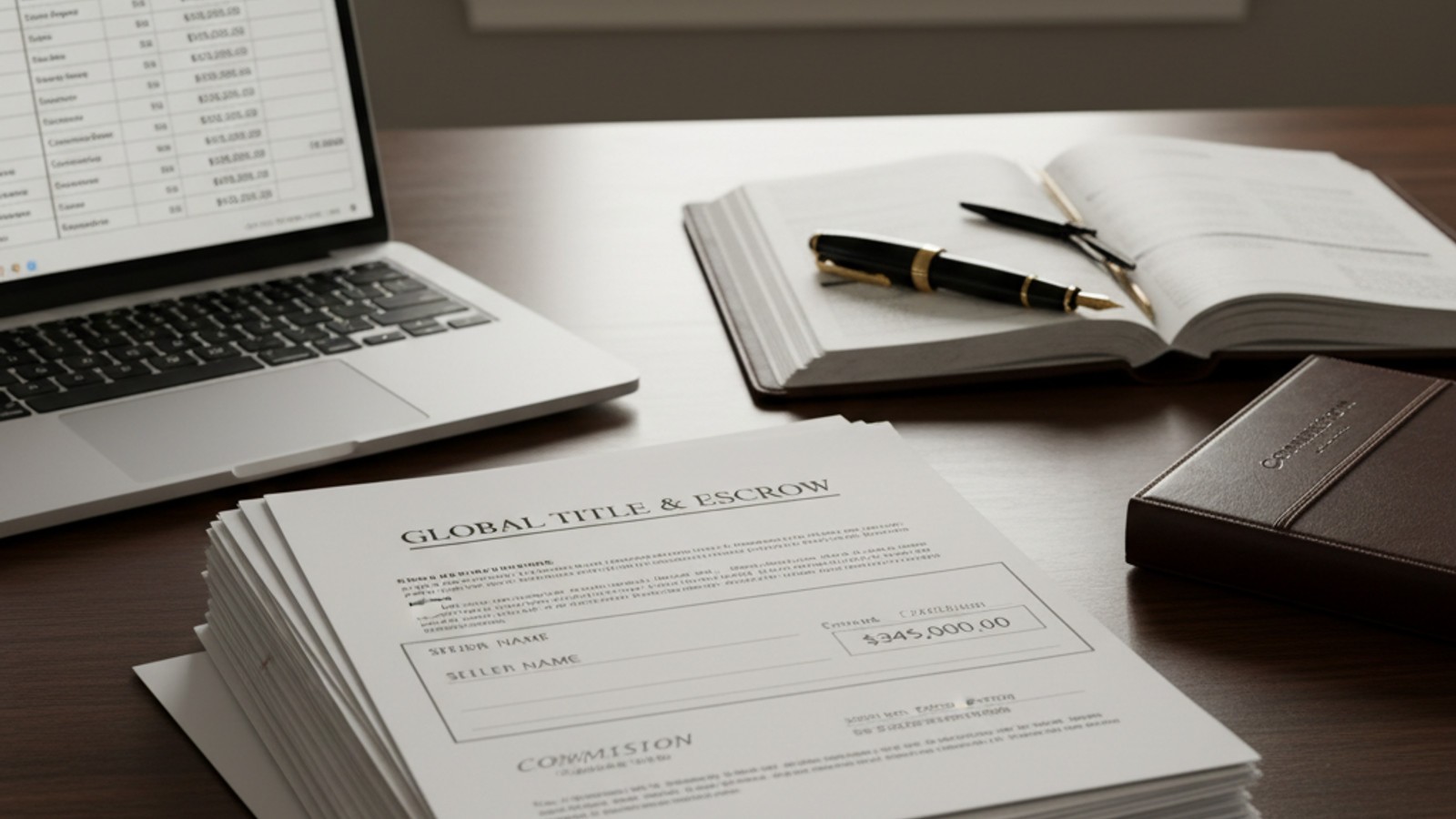
It is a common misconception that buyers or sellers hand a personal check directly to their real estate agent on closing day. In reality, the flow of funds is heavily regulated to protect everyone involved. When you buy or sell a house, the funds are paid into a secure account managed by an escrow company or a title company.
Once the sale is finalized, the escrow or title company disburses the total commission to the managing real estate brokerages involved in the sale. Understanding how escrow works is important here, because the title office acts as a neutral third party, making sure all debts and fees are paid correctly.
From there, the brokerage takes its share and pays the individual agent based on a pre-agreed commission split. For example, an agent might have a 50/50 or 70/30 split with their managing broker. This means even if you see a large commission line item on the closing disclosure for a $500,000 home sale, your specific agent is only taking home a portion of that amount after brokerage fees and taxes.
Who Actually Pays the Agent Commissions?
Understanding the flow of funds naturally leads to the next big question of who is actually footing the bill. Historically, the seller paid the total real estate commission out of the home's sale proceeds, which was then split between the listing agent and the buyer's agent.
However, recent changes in the industry have shifted how this works. Following the mid-2024 National Association of Realtors settlement, buyer agent compensation is no longer guaranteed or advertised through the local Multiple Listing Service. Because all real estate commissions are negotiable, the structure of who pays can vary from deal to deal.
Today, buyers may need to pay their agent directly if the seller chooses not to offer a concession to cover that cost. This is all clearly established upfront in a written buyer representation agreement before you even start touring homes for sale in your desired area. It is just one more reason it is vital to have a transparent conversation about the true cost of selling a house or buying one right at the start.
How Long After Closing Does an Agent Get Their Commission Check?
So, you have finally signed the massive stack of paperwork at the closing table. While you might be popping champagne and celebrating your new home, your agent is usually still waiting for their payment to clear.
The actual timeline from signing to the agent receiving their paycheck involves a few crucial steps. First, we have to wait for the buyer's loan to fund, which can take anywhere from a few hours to a full business day. Understanding what funding in real estate means is helpful here - it is the moment the lender actually wires the mortgage money to the title company.
Once the transaction is funded, the title company must record the new deed with the local county office to make the transfer of ownership official. After recording is complete, the title company wires the commission to the real estate brokerage. Finally, the brokerage processes the payment and issues a direct deposit or physical check to the agent. In most local markets, this entire post-closing sequence takes roughly 24 to 72 hours.
Do Real Estate Agents Get Paid if a House Doesn't Sell?
Real estate is a contingency-based profession, meaning agents carry the financial risk of the transaction right up until the end. If a house does not sell, the agent typically earns a 0% commission. We only get paid for a successful outcome.
There are many reasons pending home sales fall through, such as a buyer backing out during the inspection period or failing to secure their financing. In those cases, the agent starts over with marketing or house hunting without any compensation for the hours already worked.
Similarly, if a listing agreement expires and the home never sells, the listing agent is not paid a commission. Depending on the specific contract, a seller might occasionally be liable for certain upfront marketing costs like professional photography, but the agent's actual labor goes completely unpaid if the deal dies.
Frequently Asked Questions
Do real estate agents get paid an hourly wage?
No, real estate agents do not earn an hourly wage or a standard W2 salary. They are independent contractors who work strictly on commission, meaning an agent could spend 40 hours showing you properties and earn absolutely nothing if you decide not to buy.
Can a real estate agent keep my earnest money if the deal falls through?
Absolutely not, as agents do not pocket earnest money as a substitute for commission. If a deal falls through, your $5,000 or $10,000 earnest money deposit either goes to the seller if you breached the contract, or it is safely returned to you if you backed out using a valid contractual contingency.
When do real estate agents get paid for a rental property?
For tenant and landlord placement, agents typically get paid their commission as soon as the lease is signed and the tenant's security deposit clears. In a busy local rental market, this means the agent usually receives their fee within a few days of the tenant successfully securing the keys to the property.


Let's Connect
If forms are not your thing you can email us at: info@speichergroup.com or call: 301-710-9920